











Raising a responsible, attentive, and emotionally balanced child is every parent’s desire. However, there is one thing that all seasoned educators and child psychologists agree on: developing that kind of character takes time. It starts with instilling good habits for kids from an early age. A child’s personality is shaped by their environment, school, and family, and the earlier we start, the firmer the foundation.
Comprehending the importance of discipline in early childhood education is crucial, regardless of whether you are an experienced educator or a parent navigating the school year for the first time. Here, discipline is defined as structure, routine, consistency, and directed freedom that enables kids to make better decisions on their own, rather than punishment.
Why Early Childhood Is the Golden Window
Neuroscience has long established that the first eight years of a child’s life are the most critical for brain development. During this period, neural pathways are being formed at a rapid pace. Habits, whether good or bad, get wired deeply into the brain during this window. This is exactly why early childhood behavior development is not something to delay or take lightly.
Children who learn to manage their time, follow routines, show respect, and persist through challenges during their early years carry those skills well into adolescence and adulthood. Studies consistently show that kids with structured environments in their early years perform better academically, socially, and emotionally as they grow older.
The Importance of Discipline in Early Childhood
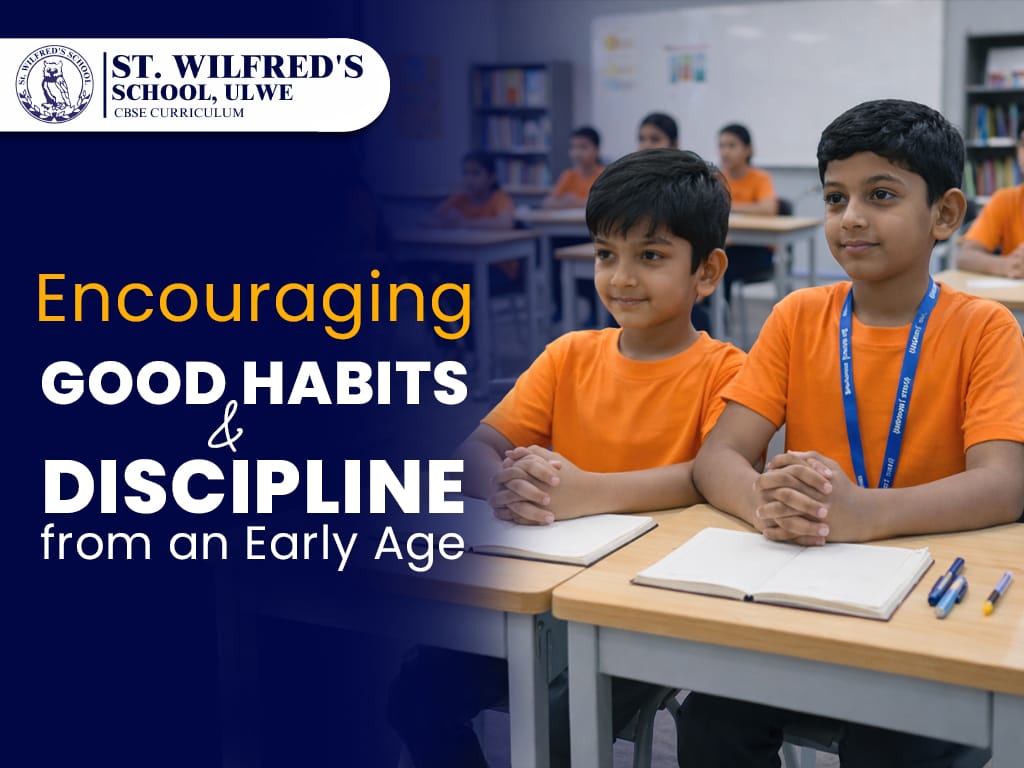
It is impossible to overestimate the importance of discipline in early childhood, yet it remains one of the most misinterpreted ideas in contemporary parenting. Discipline is often mistaken for rigidity or strictness by parents. Age-appropriate discipline actually refers to providing a secure environment for kids to experiment, make mistakes, and gain knowledge.
Children feel safer when they are given clear boundaries. They gain self-regulation, the capacity to control their own feelings and impulses, as well as an understanding of cause and effect and accountability. These are not merely classroom talents; they are life skills. In order to support this type of comprehensive discipline from the very beginning, schools, especially those such as the CBSE schools in Ulwe, integrate organized learning with value education.
How to Teach Discipline to a Child: Practical Strategies
Every parent and educator may learn how to teach discipline to their child. The following are some tried-and-true, age-appropriate tactics:
1. Set Clear, Consistent Routines
Predictability is what kids love. Children have a sense of order when they follow a daily schedule that includes wake-up time, meals, study time, playtime, and bedtime. Children start to internalize the routine on their own when the day has a clear framework, so they don’t require continual reminders.
2. Model the Behavior You Expect
Youngsters are innate observers. They will learn how to handle stress more efficiently than any lesson if they observe you reading every night, keeping your surroundings tidy, or handling tension in a composed manner. The most effective curriculum your child will ever follow is the one you set in motion.
3. Use Positive Reinforcement
Give specific praise instead of merely stating “good job.” For example: “I noticed you kept your books neat after studying; that’s a wonderful habit!” Children who get specific praise are more likely to repeat the behavior because they know exactly what is being praised.
4. Set Natural Consequences
A child who forgets their homework should be given the opportunity to experience the natural consequence, explaining it to the instructor, rather than being punished. Accountability is taught in this way without instilling fear. Lead, not command.
5. Start Small and Build Gradually
Don’t set 10 rules for a four-year-old. Saying “please” and “thank you” and keeping toys in the basket are basic expectations to start with. As they become older, add more responsibilities.
Developing Good Habits in Children: Where to Begin
Developing good habits in children begins with the fundamentals: reading, respect, sleep, cleanliness, and a balanced diet. These fundamental behaviors have an impact on all facets of a child’s existence. Early sleepers pay closer attention in class. Daily reading helps a child’s language and comprehension skills grow organically.
One of the most effective things you can do for a young child is to help them develop reading habits. Reading at home for just 15 to 20 minutes a day lays the groundwork for lifetime learning. Parents who make the investment to help in learning at home for primary students give them a significant advantage—not by converting the house into a classroom, but by integrating learning into everyday life in a fun and organic way.
Curiosity and focus are fostered by simple activities like working puzzles together, talking about stories before bed, or spending weekends at the library. The child has a smooth learning experience when these methods are used in conjunction with what is taught in schools.
The Role of Schools in Reinforcing Discipline and Habits
Parents shouldn’t have to manage everything alone, but they can’t. Early childhood behavior development is greatly influenced by the environment in which children spend a large portion of their day at school. Schools that uphold a disciplined curriculum, encourage moral instruction, and facilitate social-emotional learning are vital collaborators in a child’s development.
Reputable universities are frequently the first choice for parents seeking the ideal educational setting. CBSE schools in Navi Mumbai, for example, are renowned for their well-rounded approach to character development and academics. Because of its emphasis on holistic education, the CBSE curriculum includes athletics, activities, value periods, and cooperative learning, all of which help young students develop self-discipline, teamwork, and responsibility.
Children develop confidence and self-discipline far more successfully when school and home are in sync, when both settings set clear expectations, recognize effort, and foster independence.
Making Learning at Home Work for Primary Students
Learning at home for primary students doesn’t mean hours of worksheets or extra tuition. It means creating a home environment that supports curiosity and focus. A designated, clutter-free study corner sends a powerful signal to a child that learning is important. Switching off screens during study time, being present during homework (without doing it for them), and asking open-ended questions like “What was the most interesting thing you learned today?” All contribute to a rich, disciplined learning environment at home.
Creating a weekly reading chart, a small chore roster, or a habit tracker for primary-aged children is both fun and purposeful. When kids see their own progress, a sticker on the chart, or a completed row, they feel motivated to keep going. This self-motivation is the foundation of developing good habits in children that last well beyond childhood.
Conclusion
The years between 2 and 10 are irreplaceable. The good habits for kids you nurture today, through consistency, patience, and love, are the seeds of the responsible, disciplined, and compassionate adult they will become. Whether it is through structured schools like the CBSE schools in Navi Mumbai or through intentional learning at home for primary students, every small, daily effort adds up to a lifetime of good character.
Frequently Asked Questions
Q1. At what age should parents start teaching discipline to a child?
You can begin as early as 18 months to 2 years. At this stage, simple boundaries like “we don’t throw food” or “we tidy up toys before bedtime” are very effective. The key is consistency and patience; toddlers learn through repetition, not reasoning.
Q2. How can I develop good habits in my child without being too strict?
Pay more attention to routines than strict regulations. Make routines seem effortless and pleasurable, such as making clearing up a fun race against the clock or turning reading before bed into a ritual that strengthens relationships.
Q3. How do CBSE schools support early childhood behavior development?
The curriculum at CBSE schools is planned to combine academic instruction with co-curricular activities, value education, and life skills. Numerous CBSE schools in Navi Mumbai offer specialized social-emotional learning programs that support kids’ academic development while also fostering self-discipline, empathy, and responsibility.