










Why Traditional Teaching Methods Are No Longer Enough for Today’s Students
When we talk about traditional teaching methods, we mean a typical classroom from 20 years ago. A teacher stands at the blackboard teaching students, students copy notes, and everyone follows the same pace through the same textbook. That approach worked for a long time, but today’s students are growing up in a completely different world with a different teaching approach, and the gap between how they learn naturally and how they are often taught in school is becoming impossible to ignore.
This is not about blaming teachers or dismissing the value of structure. It is about understanding that education needs to grow alongside the world it prepares students for.
What Are Traditional Teaching Methods?
Traditional teaching methods refer to a teacher-led, lecture-based approach in which information flows in a single direction from the educator to the student, and the same approach is used for every student. Assessment is largely exam-focused, seating is fixed, and lessons follow a standardized curriculum with little room for personalization.
For decades, this was the backbone of education systems worldwide. And while it produced generations of graduates, the modern world has different demands beyond it.
Why Traditional Teaching Methods Are Ineffective for Today’s Learners
Students Learn Differently Now
Today’s children are using digital tools and want interactive content, instant feedback, and details on demand. It is too difficult for them to sit continuously for 45 minutes, not because they lack discipline, but because they learn differently, shaped by a dynamic learning environment.
Research consistently shows that rote learning leads to lower retention, especially under exam pressure, and they forget what they learn. Students remember better when they are actively involved in the process and observe things on their own. This is one of the main reasons why traditional teaching methods are ineffective when applied without adaptation.
One-Size-Fits-All Does Not Work Anymore
Every classroom contains students with different learning paces, interests, and strengths. An approach that is useful for one student may not be necessary for others. Traditional models rarely stand on their own because every student has different learning abilities, and a similar approach does not work for every child.
Modern teaching methods in education address this through differentiated instruction, project-based learning, and technology-assisted personalization that adapts to each student’s needs.
Benefits of Modern Teaching Methods in Education
Deeper Engagement
When students are involved in discussions, group projects, and real-world activities, they engage more deeply with the subject and understand it better, which leads to longer retention. The benefits of modern teaching methods in education are beyond just academic scores. They build curiosity, collaboration, and confidence.
Technology as a Learning Partner
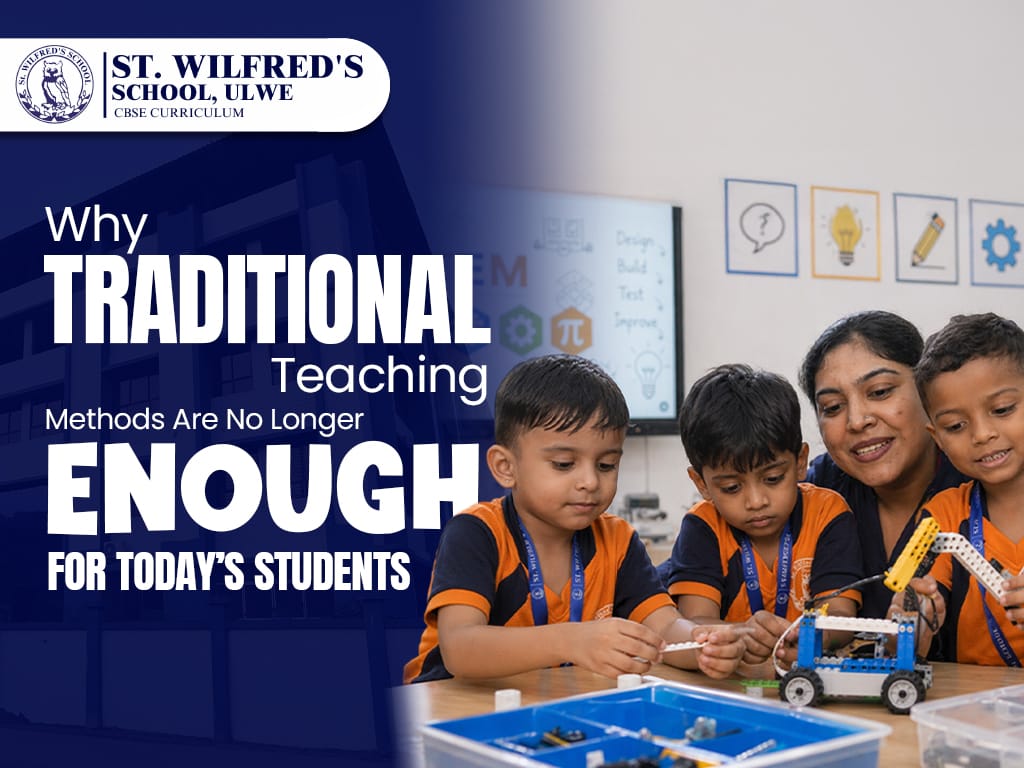
The ways in which online learning tools are helping students has become a significant conversation in modern education circles. Platforms that offer interactive lessons, instant feedback, adaptive quizzes, and multimedia content have enabled students to learn at their own pace, revisit concepts they struggle with, and remain genuinely interested in the subject.
Schools that integrate these tools thoughtfully, rather than just adding screens for the sake of it, tend to see stronger outcomes.
The Role of Teachers in This Shift
It would be wrong to suggest that modern education is about removing teachers from the equation because the reality is opposite. The role of teachers in a child’s academic success remains central. What changes is how that role looks.
In a modern classroom, teachers serve as facilitators and mentors rather than as the sole sources of information, as students now have digital platforms they can access 24/7. They guide students through problems, encourage questions, and create an environment where curiosity is valued. This shift actually allows teachers to have a deeper impact by connecting with students rather than just delivering content.
What Good Schools Are Already Doing
The best schools in Ulwe are already making this transition because they understand the value of these changes. They are designing classrooms around collaboration, investing in teacher training so teachers can manage students and use the right approach to teach them, and building partnerships between technology tools and human instruction so that students interact better than before.
These schools recognize that the goal of education is not just to fill students with information. It is to shape thinkers, communicators, and lifelong learners.
Conclusion
The world has changed, and the teaching approach must change with it. This does not mean we totally abandoned what worked before; rather, we use it, make changes to it, and make it more useful. Traditional teaching methods offer generations a foundation, but today’s students need more than that, as the world is changing dynamically. They need the skills, mindset, and adaptability to thrive in a world that is moving faster than ever.
Frequently Asked Questions
Q1. What are the main differences between traditional and modern teaching methods?
Traditional methods are mainly teacher-centered, relying on lectures and emphasizing rote learning. Modern methods are mainly student-centered, incorporating critical thinking, technology, collaboration, and flexible assessment.
Q2. Why are traditional teaching methods considered ineffective today?
They do not align with individual learning styles, offer limited engagement, and do not build the practical skills students need in today’s world.
Q3. What are the benefits of modern teaching methods in education? Modern teaching methods improve knowledge retention and engagement, support critical thinking, prepare students for real-world challenges, and enable personalized learning paths.
Q4. How are online learning tools helping students?
Online tools provide interactive content that attracts students, enhances learning, provides instant feedback, and offers flexibility, allowing students to learn at their own pace and revisit difficult concepts whenever needed.
Q5. How does the role of teachers change in modern education? Teachers shift from being the sole source of information to being facilitators and mentors who guide students through active, inquiry-based learning experiences.