
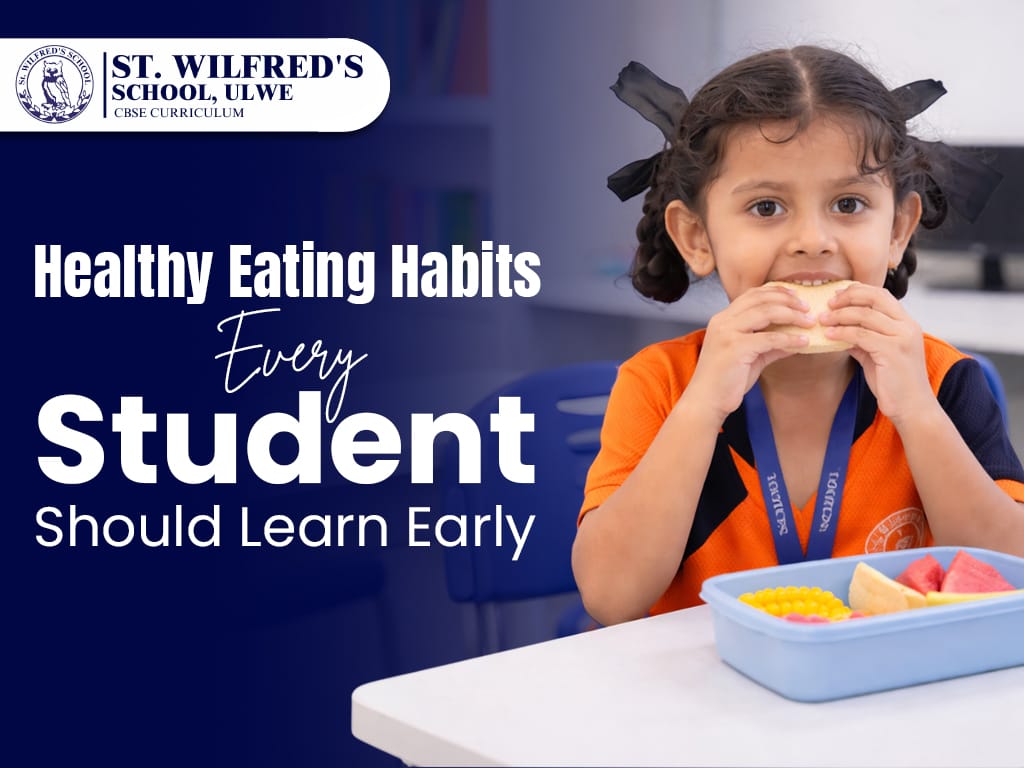
Every parent wants good health and a bright future for their child, but they overlook the eating habits. The food a child eats every day is directly related to how well they do in class and how energetic they feel on the playground. Building healthy eating habits for students early is not just a wellness tip: it is one of the smartest investments you can make in your child’s development.
Progressive institutions like the best schools in Ulwe recognize this well and incorporate nutrition education into their daily routines, from healthy tiffin guidelines to awareness programs about balanced eating.
Why Healthy Eating Habits for Students Matter
Children today face more academic pressure, screen time, and fast-food eating habits than any generation before them. In this environment, understanding the importance of healthy eating for students goes far beyond counting calories or avoiding junk food.
For parents, it is important to understand that nutrition affects mood, memory, sleep quality, and even immune function. A child who regularly skips breakfast or survives on junk food like chips and sugary drinks will struggle to concentrate, not because they’re not trying but because their brain simply isn’t getting the fuel it needs.
The Brain-Food Connection
Many of you don’t know that the brain uses about 20% of the body’s total energy. For growing children, it is significant that food rich in iron, omega-3 fatty acids, B vitamins, and protein directly supports cognitive development and learning capacity.
When students eat meals full of nutrition like eggs, nuts, leafy greens, fruits, and whole grains, it reflects better memory retention, sharper attention spans, and improved problem-solving skills. On the other side, diets high in sugar and processed food are linked to fatigue, irritability, and difficulty focusing.
Importance of Healthy Eating for Students Beyond Academics
Healthy eating is about more than academic improvements for children. It’s also
- Builds a stronger immune system, meaning fewer sick days
- Supports physical growth and bone development
- Improves emotional well-being and reduces anxiety
- Establishes lifelong patterns that reduce the risk of chronic diseases
Habits formed in childhood last a lifetime. A child who learns to enjoy vegetables, stay hydrated, and eat mindfully will carry those practices well into adulthood.
What Does a Balanced Diet for Students Look Like?
A balanced diet for students doesn’t have to be complicated or expensive. It simply means eating a variety of foods from all major food groups in the right proportions.
Key Nutrients Every Student Needs
| Nutrient | Why It Matters | Food Sources |
| Carbohydrates | Primary energy source | Brown rice, oats, whole wheat bread |
| Protein | Muscle and brain development | Eggs, lentils, paneer, chicken |
| Iron | Focus and oxygen transport | Spinach, beans, fortified cereals |
| Calcium | Strong bones and teeth | Milk, yogurt, broccoli |
| Omega-3s | Brain health and mood | Walnuts, flaxseeds, fish |
| Vitamins C & D | Immunity and energy | Oranges, sunlight, carrots |
The key is variety and consistency, not perfection. A student doesn’t need to eat perfectly every day; they need to eat well most of the time.
How Schools Play a Role
Apart from homes, schools also play an equally critical role in shaping a child’s relationship with food. Even at the foundational stage, the best play school in Ulwe can introduce young children to healthy food through storytelling, fun activities, and colorful food charts, making nutritious choices feel natural and exciting from day one.
When parents and schools work together with a shared vision for student wellness, the results are transformative.
A Healthy Diet for School Students — Practical Meal Tips
Here’s what a realistic, wholesome day of eating might look like for a school-going child:
Breakfast (7:00–8:00 AM): Vegetable poha or whole wheat toast with peanut butter + a glass of milk
Mid-Morning Snack (10:30 AM): A seasonal fruit or a small handful of mixed nuts
Lunch (1:00 PM): Dal, roti or brown rice, a vegetable dish, and a small cup of curd
Evening Snack (4:30 PM): Sprouts chaat, roasted makhana, or homemade chikki
Dinner (7:30–8:00 PM): Light khichdi or chapati with sabzi and a glass of warm milk before bed
This isn’t a strict prescription; it’s a flexible framework. Swap ingredients based on your child’s preferences, seasonal availability, and cultural food traditions.
Conclusion: Small Habits, Big Futures
A child’s body and mind are always growing, and what they eat plays a bigger role than most of us think. Teaching healthy eating habits for students early is not putting restrictions on them; it’s about giving children the energy, clarity, and vitality to show up fully in every classroom, playground, and life moment.
As parents, you set the example. As educators, you reinforce it. And as a child grows in an environment that values good nutrition, whether at home or in institutions like the best schools in Ulwe or the best play school in Ulwe, they develop not just academic intelligence but the life skills to thrive.
Start small. Stay consistent. The habits your child builds today will nourish them for a lifetime.
FAQs
At what age should children start learning healthy eating habits?
Children aged 2–3 years old are starting to form taste preferences and food associations. The best play-schools in Ulwe and other early-childhood institutions often use food charts, storytelling, and colorful meals to make nutritious food feel exciting rather than forced. The earlier you start, the more natural it feels.
How much water should a school-going child drink daily?
Children aged 5–12 should aim for 6–8 glasses (about 1.5–2 liters) of water daily. Even mild dehydration can cause fatigue, headaches, and difficulty concentrating, all of which directly affect classroom performance.
Are packed school lunches healthier than canteen food?
It depends on what you packed in their lunch. A thoughtfully prepared home tiffin with a grain, a protein, and a vegetable is usually more nutritious and portion-appropriate than canteen food. However, the best schools in Ulwe and other quality institutions often provide balanced, monitored canteen menus as well.