
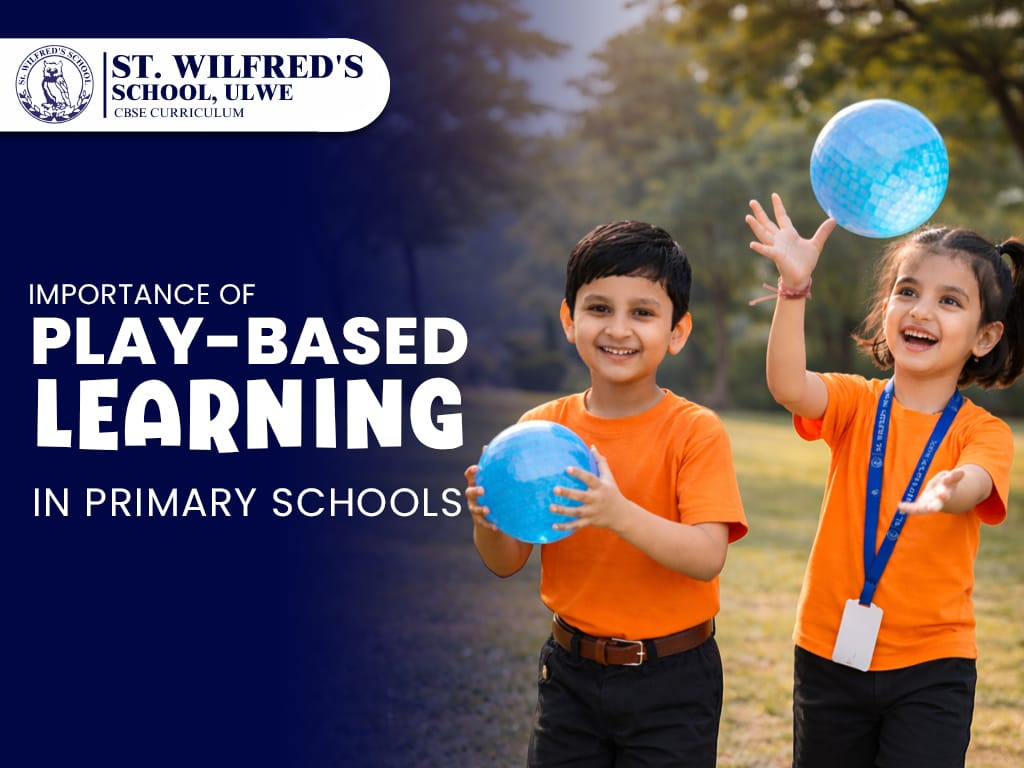
Parents and educators are realizing more and more that rote learning is insufficient in today’s rapidly evolving educational environment. To thrive, kids need to be able to think critically, be creative, be emotionally intelligent, and work well with others. Play-based learning becomes crucial at this point.
At this point, learning through play becomes crucial.
It is not just about textbooks and testing; primary education is about building solid foundations for lifelong learning. Children use play and classroom instruction to meaningfully explore, experiment, and learn about the world. Let’s examine the ways in which play-based education has revolutionized preschools and the reasons it is crucial to kids’ general growth.
What Is Play-Based Learning?
A teaching philosophy known as “play-based education” makes use of both structured and unstructured play as the main learning tool. This method encourages kids to explore, ask questions, be creative, and work together instead of making them passively absorb information or look for knowledge on a blackboard. Whether it is building with blocks, identifying color shapes, or role-playing, every activity is intentionally designed to build intellectual, social, and emotional skills.
A play-based curriculum doesn’t give up academic goals; it integrates them naturally into daily experiences, making them feel less like lessons and more like innovation.
Why Play and Learning Go Hand in Hand
Play and learning in schools are closely related, according to decades of study on child development. Children’s brains are very busy during play, creating connections between brain cells, improving problem-solving skills, and acquiring language. Researchers have found that youngsters recall information much better when it is experienced through play than when it is taught to them passively.
Consider teaching a child to count through offering them tokens in a game as opposed to having them recite numbers on a worksheet. The former equally stimulates physical abilities, curiosity, and practical application. That is the influence of learning through play.
Key Benefits of Play-Based Learning
The benefits of play-based learning span far beyond the classroom. Here is why educators and parents worldwide are embracing this approach:
Cognitive Development: Children are forced to plan, think, and make decisions as they play. Building activities, pretend play, and puzzles help develop the logical reasoning, memory, and focus that are the cornerstones of language arts, math, and science.
Social and Emotional Intelligence: Children learn to negotiate rules, take turns, handle conflict, and develop empathy as they play together. There is no textbook that can adequately teach these life skills. Children who attend schools that value play are frequently more cooperative, emotionally stable, and self-assured.
Language and Literacy: Dramatic situations, puppet shows, and storytelling games all organically increase vocabulary and comprehension. Youngsters listen to their peers, ask questions, and express their thoughts—all essential elements of effective communication.
Physical Well-being: Outdoor play and movement activities improve gross motor skills, physical health, and even mental focus. Children who move regularly are found to be more attentive during structured learning sessions.
Creativity and Imagination: Open-ended play fosters creative thinking. When a child turns a cardboard box into a spaceship, they are practicing the same innovation mindset that drives inventors, artists, and entrepreneurs.
Play-Based Learning and Good Habits from an Early Age
A structured play-based setting has the unexpected benefit of organically developing discipline and good habits from an early age. When kids engage in supervised play activities, clean up after themselves, wait their time, and play by the rules, they learn discipline without feeling burdened by it. Implementing these behaviors consistently develops responsible, independent students who take these traits into higher education and beyond.
Play-based schools foster an environment where children desire to obey structure because it makes the game better, as opposed to enforcing obedience through fear or rigid commands. Sincere, long-lasting discipline is built on that fundamental drive.
Choosing the Right School: Why It Matters
It is just as crucial for parents navigating school applications to comprehend a school’s educational style as it is to verify its board affiliation or infrastructure. The good news is that along with excellent academics, advanced educational institutions in the Mumbai Metropolitan Region are increasingly implementing play-centered techniques.
Parents looking at CBSE schools in Navi Mumbai will find that many top-ranked institutions now integrate play-based elements into their primary curriculum, recognizing that a child who loves coming to school learns far more than one who dreads it. The CBSE framework itself encourages experiential and activity-based learning in the foundational and preparatory stages, making it well aligned with this philosophy.
Similarly, if you are searching for the best play school in Ulwe, look for institutions that go beyond rote learning. The ideal early childhood center will have trained educators who design play scenarios with clear developmental goals, a safe and stimulating physical environment, and a philosophy that treats each child as a capable, curious learner, not an empty vessel to be filled.
Making the Shift: What Schools Can Do
It is not necessary to dissolve academics in order to switch to a play-based curriculum; rather, it is necessary to reconsider how those academics are taught. Redesigning classrooms into activity zones, providing teachers with observation-based assessment training, introducing theater and storytelling into language classes, and arranging frequent outside free play are all ways that schools might get started. Teachers start to view play as profound learning time rather than as downtime when they realize that a child building a tower is simultaneously practicing sequencing, spatial reasoning, and tenacity.
Conclusion
It is impossible to exaggerate the value of learning through play in elementary schools. It fosters an atmosphere that makes kids feel secure, involved, and inspired to learn. Schools may foster creativity, self-assurance, and character while guaranteeing academic achievement with a carefully designed play-based curriculum.
Making the decision to attend an institution that emphasizes learning through play can have a profound impact on parents weighing their options for early education, whether they are looking into the top play school in Ulwe or investigating CBSE schools in Navi Mumbai.
After all, when kids love the process, learning becomes a permanent endeavor rather than a short-term assignment.
FAQs
1. What is play-based learning in primary schools?
This approach uses structured play activities and interactive experiences to teach kids academic and life skills.
2. What are the main benefits of play-based learning?
Stronger academic foundations, increased emotional development, higher creativity, and improved social skills are the main advantages of play-based learning.
3. Does play-based education affect discipline?
No, play-based education actually promotes responsibility, teamwork, and good habits and discipline from an early age through guided activities.