
Most children spend their time inside classrooms, often moving from one subject to another, and get very little time to explore the world around them. While textbooks and digital tools are important, learning becomes more interesting and meaningful when they experience it with their own hands.
This is the reason outdoor learning for students has become an important part of modern education. There are several outdoor activities schools can embrace, and gardening is one among them that stands out as one of the most engaging activities, in which students take active participation and get new educational experiences.
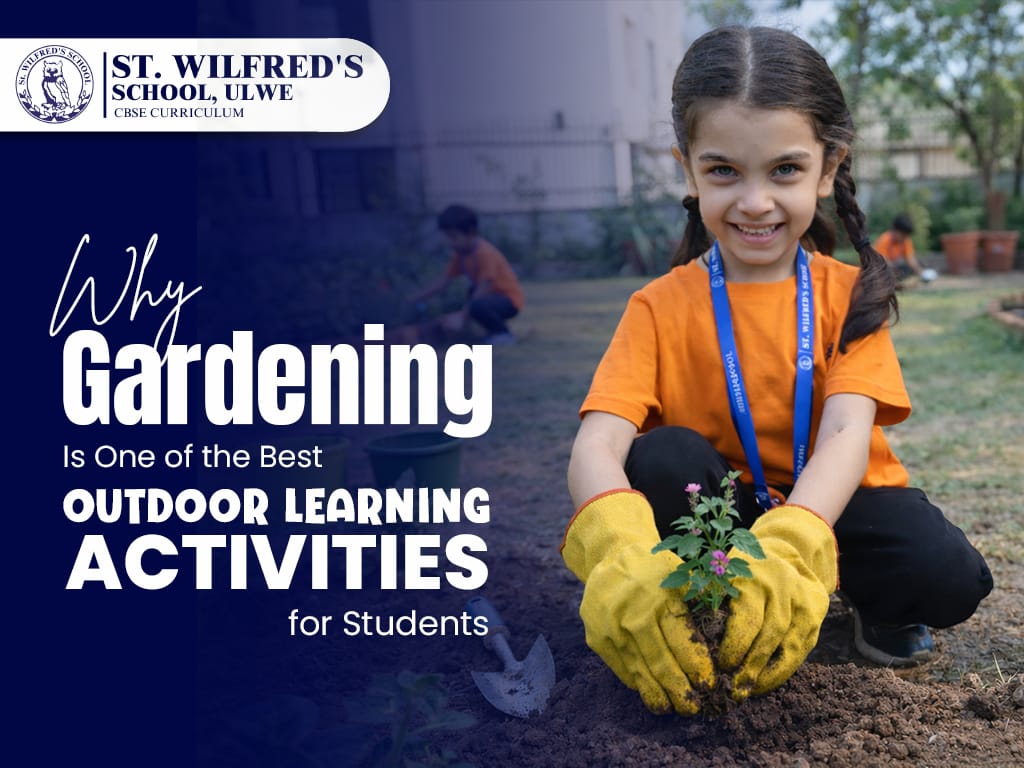
In school gardening activities, students get the chance of planting seeds, observing the growth of the plants, and understanding how nature actually works. These activities start as small classroom projects and turn into a powerful learning experience that enhances the learning experience of students that teaches science, responsibility, and patience.
Many progressive institutions, including several schools in Ulwe, offer outdoor activities, such as gardening for kids in school, and include it as a part of play-based learning, allowing children to explore and learn naturally.
What Are School Gardening Activities?
School gardening activities involve creating small garden spaces within school campuses where students can actively participate in growing plants.
These activities may include:
- Planting seeds or saplings
- Regular watering of plants
- Learning more about types of soil and compost
- Observing insects and pollination
- Harvesting vegetables or flowers
For children, these tasks are exciting discoveries that engage them more in learning. It is exciting to watch a tiny seed slowly grow into a plant. Gardening also helps students understand where food comes from, which many children today rarely get the chance to see firsthand.
Gardening as a Powerful Learning Tool
One of the biggest advantages of gardening as a learning tool is that it encourages hands-on learning. Students observe the entire process of growth rather than reading about it in books. They see how soil, sunlight, and water work together to help plants survive.
This enhances concepts like plant life cycles, ecosystems, and environmental science, making them much easier to understand.
Encouraging Curiosity and Observation
Gardening naturally encourages children to ask questions as they observe plants’ growth, and certain insects are always present near flowers, which creates curiosity.
They start raising questions such as “Why does this plant need more sunlight?” or “What do worms do in the soil? That becomes the starting point for real learning.
Benefits of Gardening for Children
There are many reasons why educators believe gardening is one of the most beneficial activities for students.
Supports Physical Development
When they perform activities like digging soil, planting seeds, and watering plants, all involve movement, which makes children active. Even small activities in the garden help improve coordination and motor skills; children get the opportunity to spend time outdoors instead of sitting in front of screens.
Encourages Healthy Eating Habits
One of the interesting benefits of gardening for children is how it changes their attitude toward food. When children grow vegetables themselves, they often feel excited to taste because they help in producing those vegetables. For example, a tomato that is picked directly from the garden is found far more interesting than one bought from a store.
Gardening and Play-Based Learning
Gardening fits perfectly within the concept of play-based learning. Children learn through exploration and interaction with their environment rather than sitting in the classroom all the time.
Gardening activities can connect with many subjects:
- Science: Understanding plants, soil, and insects
- Math: Measuring plant height or counting leaves
- Art: Drawing flowers or creating nature crafts
- Language: Writing stories or observations about the garden
Because of this, gardening becomes more than just an outdoor activity, as it becomes a creative classroom without walls.
Why Schools Are Encouraging Gardening Programs
Schools around the world are beginning to recognize the importance of nature-based learning. Gardening programs help students in developing environmental awareness and understanding about sustainability and nature conservation. They stay physically active and get better learning practical life skills.
Even small school gardens can make a big difference in how children experience learning. In growing communities like Ulwe, several schools in Ulwe are already exploring innovative outdoor programs. The best play school in Ulwe often uses gardening activities to help children connect with nature while learning essential concepts.
Conclusion
Gardening looks like a simple activity, but it impacts students widely. Children learn about science, teamwork, responsibility, and sustainability through school gardening activities.
As schools increasingly prioritize holistic teaching methods , gardening for kids in school becomes an important part of outdoor learning for students.
By encouraging children to plant, nurture, and observe the natural world, schools are not just teaching lessons but actually helping young minds grow and learn about new things.
The benefits of gardening for children extend beyond academics, supporting both physical health and emotional development.
FAQs
Why is gardening important for students?
Gardening helps students understand nature, develop responsibility, and improve their scientific knowledge by offering them hands-on learning experiences.
What are school gardening activities?
School gardening activities include planting seeds, watering plants, learning about soil, observing insects, and harvesting vegetables or flowers within school gardens.
How does gardening support play-based learning?
Gardening supports play-based learning by allowing children to explore, experiment, and learn naturally through activities like planting, observing, and measuring plant growth.